
Invited Speaker
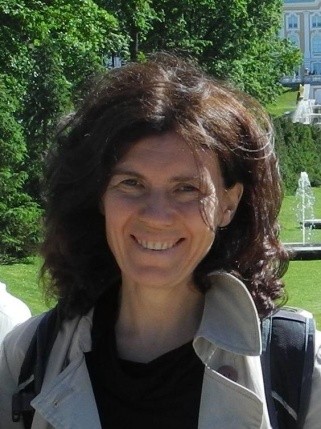
Prof. Andreja Tepavčević
Full Professor at the Department of Mathematics and Informatics, Faculty of Sciences, University of Novi Sad & Mathematical Institute of the Serbian Academy of Sciences and Arts (Mathematical Institute SANU) in Belgrade, SerbiaSpeech Title: Equations in Ω‑algebra in Classical Setting
Abstract: An Ω‑algebra is a kind of fuzzy algebra in the lattice-valued framework, with an algebra equipped with a lattice‑valued equality. Algebra identities are satisfied as special lattice-valued formulas, and as a consequence, cuts of the equality correspond to weak congruences of the underlying crisp algebra. In earlier work, we investigated many types of Ω‑algebras. Recently, in an attempt to study consequences of our work in the classical setting with the [0,1] interval, we have studied connections with chains in weak congruence lattices. Building on this foundation, we now turn to the classical setting of Ω‑groups and Ω‑quasigroups, where subgroup lattices and weak congruence lattices interact directly with the solvability of equations.
Classical group theory provides deep results on solvability: equations in groups are closely tied to subgroup chains, normal series, and congruence relations. In particular, solvability of equations often reflects the structure of chains in subgroup lattices, such as composition series or chains of normal subgroups. These chains serve as algebraic witnesses to the existence of solutions, linking lattice‑theoretic properties with equation solvability. Similarly, in quasigroups, congruence chains impose constraints on the solvability of functional equations, revealing structural parallels with group theory.
Our contribution demonstrates that chains of weak congruences in Ω‑groups can be systematically aligned with chains in subgroup lattices, thereby providing a lattice‑valued framework for analyzing solvability of equations. Extending this approach to Ω‑quasigroups, we show how weak congruence chains capture algebraic conditions that govern equation solvability in non‑associative settings. These results enrich the representation theory of Ω‑algebras by connecting chains of weak congruences with classical solvability theory, offering a unified perspective that bridges discrete subgroup lattices, weak congruence structures, and equation systems in both groups and quasigroups. In this way, by dealing with numbers, we are able to approximately solve some types of equations.
Keywords: Ω‑algebra, fuzzy algebra, approximate solving of equations
Biography: Dr. Andreja Tepavcevic is a principal research fellow at the Mathematical Institute of the Serbian Academy of Sciences and Arts (Mathematical Institute SANU) in Belgrade, Serbia, and a full professor at the Department of Mathematics and Informatics, Faculty of Sciences, University of Novi Sad. She graduated with two tracks in Informatics and Mathematics and defended a Ph.D. thesis at the University of Novi Sad. She was a visiting professor and gave courses and seminar lectures at more than 25 universities worldwide, including many EU countries, Japan, the USA, Russia, and others. She gave tutorials at FUZZ-IEEE conferences and was a plenary and invited speaker at many conferences. She supervised six Ph. D.s, several master's and graduate theses. Her main research is in lattice theory and theory of ordered sets; fuzzy set theory and applications, with about 200 refereed publications in journals, chapters in monographs, international conferences, one research monograph, and 10 university textbooks.
She is an associate editor and a member of the editorial board of several journals, including Fuzzy Sets and Systems, the coordinator of several research projects (national and international), and the head or a member of organizing and program committees of several conferences. From 2023-2026, she is the coordinator of the project “Advanced Techniques of Mathematical Aggregation and Approximative Equations Solving in Digital Operational Research - AT-MATADOR” financed by the Science Fund of the Republic of Serbia.
Currently, she is the chairperson of the Artificial Intelligence Seminar at Mathematical Institute SANU http://www.mi.sanu.ac.rs/novi_sajt/research/seminars/ai.php and the head of the Computer Science department at Mathematical Institute SANU.