
Special Sessions
Special session proposals should include the title, aim and scope (including a list of main topics), and the names of the organizers of the special session, together with a short biography of all organizers. A list of potential contributors will be helpful.
Special session proposals will be evaluated based on the timeliness, uniqueness of the topic and qualifications of the proposers. The proposers are expected to have a PhD degree and have a good publication track record in the proposed area. After review, a decision on whether the proposal will be accepted will be sent to the proposers within two weeks after receipt of the proposals. Accepted special sessions will be listed on the website. However, it is likely that an accepted proposal will be combined with another one to avoid multiple special sessions covering a similar topic.
Please send us the proposal via email: fsdm@fsdmconf.org
1. Aims of the Session
The special session on "Fine-Tuning and Optimization of Large Language Models" aims to create a dedicated, cutting-edge forum for researchers, engineers, and practitioners to present and discuss the latest advancements, methodologies, and practical challenges in adapting and refining large language models (LLMs) for specific tasks, domains, and resource constraints. As LLMs become foundational technologies, moving beyond their general capabilities to achieve specialized excellence and operational efficiency is paramount. This session seeks to bridge the gap between foundational model research and applied, deployable AI systems. We will foster interdisciplinary dialogue on innovative fine-tuning techniques, parameter-efficient strategies, alignment methods, and holistic optimization approaches that enhance performance, reduce costs, improve robustness, and ensure ethical deployment. Our goal is to chart the future of scalable, adaptable, and trustworthy LLM applications across all sectors of science, industry, and society.2. Targets and Contributors
The targets and contributors include the following:- Researchers and academicians in artificial intelligence, machine learning, natural language processing, and high-performance computing.
- Industry practitioners, ML engineers, and AI leads from technology companies, startups, and enterprise R&D teams implementing or customizing LLMs.
- Specialists in model optimization, efficient AI, and MLOps focused on the deployment lifecycle of LLMs.
- Postgraduate students and early-career researchers working on LLM adaptation, efficiency, and alignment.
- Domain experts from fields such as healthcare, law, finance, and education who are applying or studying task-specific LLM customization.
- Ethicists and policy researchers examining the implications of fine-tuning on model behavior, safety, and fairness.
3. Main Topics
Topics in this special session will include, but are not limited to:- Advanced Fine-Tuning Techniques: Supervised Fine-Tuning (SFT), Instruction Tuning, Reinforcement Learning from Human/AI Feedback (RLHF/RLAIF), and novel optimization algorithms for LLMs.
- Parameter-Efficient Fine-Tuning (PEFT): Innovations in LoRA, QLoRA, Adapter layers, prompt tuning, and other methods for efficient model adaptation.
- Domain-Specific Adaptation & Specialization: Strategies for fine-tuning LLMs in specialized fields (biomedical, legal, scientific, financial) with limited or proprietary data.
- Alignment & Safety Optimization: Methods for steering model behavior, improving factual accuracy (reducing hallucination), enhancing safety guardrails, and ensuring ethical outputs post-tuning.
- Optimization for Deployment: Quantization, pruning, distillation, and compilation techniques to optimize LLMs for latency, memory, and energy efficiency on edge devices or in production environments.
- Data-Centric Optimization: Curation, synthesis, and engineering of high-quality datasets for effective fine-tuning; managing bias and data provenance.
- Evaluation & Benchmarking: Novel frameworks and metrics for assessing the performance, robustness, efficiency, and safety of fine-tuned LLMs.
- Theoretical Foundations & Challenges: Understanding catastrophic forgetting, overfitting, transfer learning limits, and the stability of the fine-tuning process.
- Full-Stack & MLOps for LLMs: Workflow tools, platforms, and best practices for managing the end-to-end lifecycle of fine-tuning and deploying LLMs.
- Societal & Economic Implications: Cost-benefit analyses, environmental impact of training/fine-tuning, and the accessibility democratization of advanced LLM customization.
Second Submission Deadline for Full Papers/Abstracts: June 20, 2026
Final Submission Deadline for Full Papers: September 1, 2026
Final Submission Deadline for Abstracts (without full paper publication in conference proceeding or related journals): October 10, 2026
This special session is now open for submission and registration. Please submit your abstract/full paper via the Submission System and choose the option of Special Session on "Fine-Tuning and Optimization of Large Language Models (FTOLM)". After that, you can make the conference registration directly via the Registration Page or the conference secretary will contact you for further information.
Session Chairs:
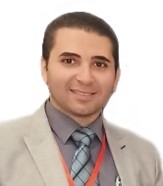
Prof. Ahmad Taher Azar, IEEE Senior Member
Full professor, College of Computer and Information Sciences, Prince Sultan University, Riyadh, Saudi Arabia.
Leader of Automated Systems & Computing Lab (ASCL), Prince Sultan University, Riyadh, Saudi Arabia.
Email: aazar@psu.edu.sa
Leader of Automated Systems & Computing Lab (ASCL), Prince Sultan University, Riyadh, Saudi Arabia.
Email: aazar@psu.edu.sa
Prof. Weiwei Jiang, IEEE Senior Member
Assistant professor, School of Information and Communication Engineering, Beijing University of Posts and Telecommunications, China
Email: jww@bupt.edu.cn
Email: jww@bupt.edu.cn
1. Aims of the Session
The session on "Applied Mathematics and Intelligent Algorithms for Modern Industry" aims to establish a dynamic forum for the dissemination of the latest research in applied mathematics and intelligent algorithms, specifically within the industrial context. It seeks to encourage interdisciplinary collaboration, connecting researchers, industry experts, and academics to explore and discuss both the challenges and emerging opportunities in the application of sophisticated mathematics and algorithmic solutions to real-world industrial problems. The session is dedicated to not only highlighting innovative research but also to fostering a deeper understanding of how these advanced methodologies can drive progress in various industrial sectors.2. Targets and Contributors
The targets and contributors include the following:- Researchers and academicians specializing in applied mathematics, computer science, engineering, and related fields.
- Industry professionals and practitioners who are implementing intelligent algorithms in various industrial sectors.
- Postgraduate students and early-career researchers who are engaged in relevant research.
- Policy makers and educators interested in the latest developments in applied mathematics and its industrial applications.
3. Main Topics
Topics in this special session will include, but not limited to:- Development and application of intelligent algorithms in industries such as manufacturing, logistics, healthcare, finance, energy, insurance, and telecommunications.
- Case studies showcasing successful implementation of mathematics models and algorithms in solving real-world industrial problems.
- Advances in computational methods, machine learning, and artificial intelligence that contribute to industrial applications.
- Theoretical and practical challenges in applying mathematics and algorithmic solutions in the industry.
- Future trends and emerging technologies in the field of applied mathematics and intelligent algorithms for industry.
- Ethical, legal, and societal implications of deploying algorithmic solutions in an industrial context.
Submission Deadline for Abstracts (without full paper publication in conference proceeding or related journals): October 10, 2026
This special session is now open for submission and registration. Please submit your abstract/full paper via the Submission System and choose the option of Special Session on " Applied Mathematics and Intelligent Algorithms for Modern Industry (AMIAMI)". After that, you can make the conference registration directly via the Registration Page or the conference secretary will contact you for further information.
Session Chairs and Committee Profiles
Session Chairs
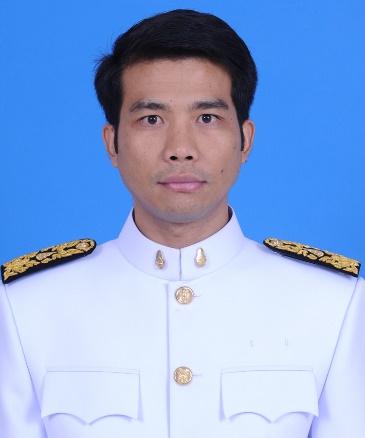
Assoc. Prof. Sayan Kaennakham (Ph.D.), Institute of Science, Suranaree University of Technology, Thailand.
Dr. Sayan Kaennakham, an Associate Professor at Suranaree University of Technology, Thailand, specializes in Computational Fluid Dynamics, a field he delved into during his Ph.D. at Coventry University, UK. He holds a Senior Fellowship with the UKPSF, underlining his academic prowess. His work is focused on areas like data science, neural networks, machine learning, and AI-driven innovation. He's authored notable books including ‘Mathematics in Daily Life’ and ‘An Introduction to a Collocation Meshless Method for DEs’. As a Graduate Program Coordinator, he leads modules in Applied Machine Learning and Scientific Data Analysis. Involved in various cutting-edge research projects, Dr. Kaennakham contributes significantly to the fields of medical imaging diagnosis and smart healthcare solutions through AI. His commitment to interdisciplinary research is evident in his roles in the Multidisciplinary Innovation Research Centre and the Applied and Computational Mathematics Research Group.
Dr. Sayan Kaennakham, an Associate Professor at Suranaree University of Technology, Thailand, specializes in Computational Fluid Dynamics, a field he delved into during his Ph.D. at Coventry University, UK. He holds a Senior Fellowship with the UKPSF, underlining his academic prowess. His work is focused on areas like data science, neural networks, machine learning, and AI-driven innovation. He's authored notable books including ‘Mathematics in Daily Life’ and ‘An Introduction to a Collocation Meshless Method for DEs’. As a Graduate Program Coordinator, he leads modules in Applied Machine Learning and Scientific Data Analysis. Involved in various cutting-edge research projects, Dr. Kaennakham contributes significantly to the fields of medical imaging diagnosis and smart healthcare solutions through AI. His commitment to interdisciplinary research is evident in his roles in the Multidisciplinary Innovation Research Centre and the Applied and Computational Mathematics Research Group.
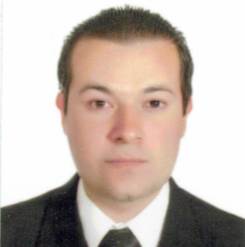
Prof. Dr. Felix Raymundo Saucedo Zendejo, Research Center for Applied Mathematics, Autonomous University of Coahuila, Mexico
Dr. Felix Raymundo Saucedo Zendejo obtained his doctorate in Engineering Sciences at the National Technological Institute of Mexico conducting research with a specialty in Computational Fluid Mechanics, Numerical Methods, Mesh-Free Methods and Simulation of industrial processes. He has a master's degree in materials science from the National Technological Institute of Mexico and has a bachelor's degree in physics from the Faculty of Physico-Mathematical Sciences of the Autonomous University of Coahuila. Today he is a full-time professor at the Research Center for Applied Mathematics from the Autonomous University of Coahuila. Over the past years, Dr. Felix Raymundo Saucedo Zendejo has been working on meshfree methods developing for the analysis and modeling of different engineering processes and physical phenomena. Results obtained on his research have been published in several international journals indexed in JCR/SCOPUS with impact factor and some of them have been cited in several research articles. He has collaborated on research projects with international partners from the University of Minho in Portugal and from Perm National Research Polytechnic University in Russia. He has extensive experience as a teacher in undergraduate lectures such as Classical Mechanics, Transport Phenomena, Electricity and Magnetism, Simulation, and Computational Physics, as well as in postgraduate lectures such as Applied Mathematics, Programming, and Computational Physics, among others.
Dr. Felix Raymundo Saucedo Zendejo obtained his doctorate in Engineering Sciences at the National Technological Institute of Mexico conducting research with a specialty in Computational Fluid Mechanics, Numerical Methods, Mesh-Free Methods and Simulation of industrial processes. He has a master's degree in materials science from the National Technological Institute of Mexico and has a bachelor's degree in physics from the Faculty of Physico-Mathematical Sciences of the Autonomous University of Coahuila. Today he is a full-time professor at the Research Center for Applied Mathematics from the Autonomous University of Coahuila. Over the past years, Dr. Felix Raymundo Saucedo Zendejo has been working on meshfree methods developing for the analysis and modeling of different engineering processes and physical phenomena. Results obtained on his research have been published in several international journals indexed in JCR/SCOPUS with impact factor and some of them have been cited in several research articles. He has collaborated on research projects with international partners from the University of Minho in Portugal and from Perm National Research Polytechnic University in Russia. He has extensive experience as a teacher in undergraduate lectures such as Classical Mechanics, Transport Phenomena, Electricity and Magnetism, Simulation, and Computational Physics, as well as in postgraduate lectures such as Applied Mathematics, Programming, and Computational Physics, among others.
Session Coordinator
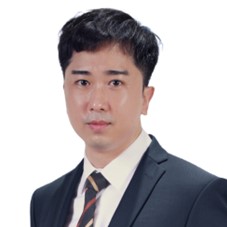
Dr. Komsan Srivisut, School of Computer Engineering, Institute of Engineering, Suranaree University of Technology, Thailand.
Dr. Komsan Srivisut is a faculty member at the School of Computer Engineering, Suranaree University of Technology, Thailand. He earned his PhD in Computer Science from the University of York, United Kingdom, where he contributed to the prestigious Dynamic Adaptive Automated Software Engineering (DAASE) programme—a flagship initiative funded by the Engineering and Physical Sciences Research Council (EPSRC). His doctoral research addressed the complexities of temporal behaviour in multithreaded applications for safety-critical multi-core architectures, pioneering the application of advanced metaheuristics and hyper-heuristics within the field of heuristic optimisation. In recognition of his scholarly excellence and impact, Dr Srivisut was honoured with the 2020 PhD Dissertation Award from the National Research Council of Thailand (NRCT). Reflecting a steadfast commitment to pedagogical excellence, he was awarded Senior Fellowship of the Higher Education Academy (SFHEA) in December 2025. His extensive teaching portfolio encompasses a diverse range of modules, including System Analysis and Design, Software Engineering, Software Testing, Human-Computer Interaction, Sustainable Computing, and Optimisation Techniques. Currently, Dr Srivisut’s research focuses on the innovative integration of Software Engineering, Evolutionary Computation, and Applied AI. His broader scholarly interests extend to Disaster Informatics, Telemedicine, Transportation, and Agricultural Technology (AgTech). He is dedicated to translating complex theoretical computational frameworks into robust, real-world solutions, ensuring that advancements in intelligence and automation deliver tangible societal benefits and address pressing global challenges.
Dr. Komsan Srivisut is a faculty member at the School of Computer Engineering, Suranaree University of Technology, Thailand. He earned his PhD in Computer Science from the University of York, United Kingdom, where he contributed to the prestigious Dynamic Adaptive Automated Software Engineering (DAASE) programme—a flagship initiative funded by the Engineering and Physical Sciences Research Council (EPSRC). His doctoral research addressed the complexities of temporal behaviour in multithreaded applications for safety-critical multi-core architectures, pioneering the application of advanced metaheuristics and hyper-heuristics within the field of heuristic optimisation. In recognition of his scholarly excellence and impact, Dr Srivisut was honoured with the 2020 PhD Dissertation Award from the National Research Council of Thailand (NRCT). Reflecting a steadfast commitment to pedagogical excellence, he was awarded Senior Fellowship of the Higher Education Academy (SFHEA) in December 2025. His extensive teaching portfolio encompasses a diverse range of modules, including System Analysis and Design, Software Engineering, Software Testing, Human-Computer Interaction, Sustainable Computing, and Optimisation Techniques. Currently, Dr Srivisut’s research focuses on the innovative integration of Software Engineering, Evolutionary Computation, and Applied AI. His broader scholarly interests extend to Disaster Informatics, Telemedicine, Transportation, and Agricultural Technology (AgTech). He is dedicated to translating complex theoretical computational frameworks into robust, real-world solutions, ensuring that advancements in intelligence and automation deliver tangible societal benefits and address pressing global challenges.
Organizing Committee
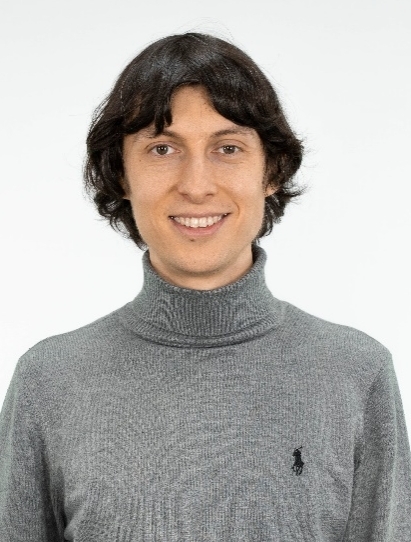
Assoc.Prof. Dr.Konstantin Ryabinin, Heidelberg University, Germany.
Dr. Konstantin Ryabinin is a research worker at the Astronomisches Rechen-Institut (ARI), Centre for Astronomy of Heidelberg University, and an associate professor at Perm State University (Computer Science Department). He currently resides in Mannheim, Germany, and works at ARI as a researcher and software engineer, developing a parallel direct solver for systems of astrometric equations within the Japan Astrometry Satellite Mission for INfrared Exploration (JASMINE). He graduated from the Mechanics and Mathematics faculty of Perm State University in 2011 and defended his Ph.D. in Computer Science in 2015. Since 2011, he has conducted research in the fields of scientific visualization, visual analytics, human-computer interaction, computational geometry, computer graphics, multimedia, ontology engineering, semantic data mining, multiplatform portability, ubiquitous computing, and the Internet of Things. He is the leading developer of the SciVi visual analytics platform and the NChart3D data visualization library. He has published more than 70 papers in scientific journals and proceedings of international conferences in the area of his research expertise.
Dr. Konstantin Ryabinin is a research worker at the Astronomisches Rechen-Institut (ARI), Centre for Astronomy of Heidelberg University, and an associate professor at Perm State University (Computer Science Department). He currently resides in Mannheim, Germany, and works at ARI as a researcher and software engineer, developing a parallel direct solver for systems of astrometric equations within the Japan Astrometry Satellite Mission for INfrared Exploration (JASMINE). He graduated from the Mechanics and Mathematics faculty of Perm State University in 2011 and defended his Ph.D. in Computer Science in 2015. Since 2011, he has conducted research in the fields of scientific visualization, visual analytics, human-computer interaction, computational geometry, computer graphics, multimedia, ontology engineering, semantic data mining, multiplatform portability, ubiquitous computing, and the Internet of Things. He is the leading developer of the SciVi visual analytics platform and the NChart3D data visualization library. He has published more than 70 papers in scientific journals and proceedings of international conferences in the area of his research expertise.

Assoc.Prof. Dr.Geanette Polanco, The Arctic University of Norway, Norway.
Dr. Geanette Polanco is a renowned mechanical engineer specializing in fluid mechanics, with a Ph.D. from Coventry University, UK. She has an extensive academic background, notably as an Associate Professor at UiT The Arctic University of Norway and previously as a Professor at Simon Bolivar University in Venezuela. Dr. Polanco has led various research projects and is recognized for her contributions in energy, environment, mechanical engineering, and engineering education. Fluent in Spanish and English, and with intermediate Norwegian skills, she combines her professional expertise with a passion for culture and nature. Her career is distinguished by a commitment to advancing mechanical engineering through innovative research and education to address actual problems.
Dr. Geanette Polanco is a renowned mechanical engineer specializing in fluid mechanics, with a Ph.D. from Coventry University, UK. She has an extensive academic background, notably as an Associate Professor at UiT The Arctic University of Norway and previously as a Professor at Simon Bolivar University in Venezuela. Dr. Polanco has led various research projects and is recognized for her contributions in energy, environment, mechanical engineering, and engineering education. Fluent in Spanish and English, and with intermediate Norwegian skills, she combines her professional expertise with a passion for culture and nature. Her career is distinguished by a commitment to advancing mechanical engineering through innovative research and education to address actual problems.
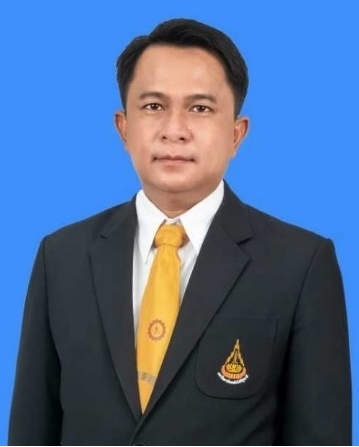
Asst.Prof. Dr. Nara Samattapapong, Suranaree University of Technology, Thailand.
Dr. Nara Samattapapong is a distinguished Assistant Professor in the Industrial Engineering Department at Suranaree University of Technology, Thailand. His academic journey includes earning a Doctorate in Mechanical Electronic Engineering from the Asian Institute of Technology in 2016, preceded by a Master's degree in the same field from the same institution in 2005, and a Bachelor's degree in Industrial Engineering from Suranaree University of Technology in 2000. Dr. Samattapapong's professional career is marked by his role as the Head of the Industrial Engineering Department at Suranaree University from 2017 to 2021, following his position as a Lecturer in the same department since 2009. His expertise spans across various domains including industrial automation, robotics, sensors, simulation, artificial intelligence, and neural network optimization. Dr. Samattapapong has also made significant contributions to the field through his international and national publications, focusing on areas such as metaheuristic approaches for vaccine cold chain networks and enterprise resource planning for Thai agricultural cooperatives. His work demonstrates a profound commitment to advancing industrial engineering through innovative research and practical applications.
Dr. Nara Samattapapong is a distinguished Assistant Professor in the Industrial Engineering Department at Suranaree University of Technology, Thailand. His academic journey includes earning a Doctorate in Mechanical Electronic Engineering from the Asian Institute of Technology in 2016, preceded by a Master's degree in the same field from the same institution in 2005, and a Bachelor's degree in Industrial Engineering from Suranaree University of Technology in 2000. Dr. Samattapapong's professional career is marked by his role as the Head of the Industrial Engineering Department at Suranaree University from 2017 to 2021, following his position as a Lecturer in the same department since 2009. His expertise spans across various domains including industrial automation, robotics, sensors, simulation, artificial intelligence, and neural network optimization. Dr. Samattapapong has also made significant contributions to the field through his international and national publications, focusing on areas such as metaheuristic approaches for vaccine cold chain networks and enterprise resource planning for Thai agricultural cooperatives. His work demonstrates a profound commitment to advancing industrial engineering through innovative research and practical applications.
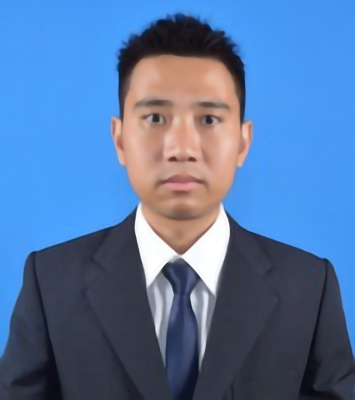
Asst. Prof. Dr. Tanakorn Sritarapipat, Suranaree University of Technology, Thailand.
Tanakorn Sritarapiwat, Ph.D., is an Assistant Professor in Geoinformatics at Suranaree University of Technology. He holds a Doctorate in Civil Engineering from The University of Tokyo and Master’s and Bachelor’s degrees in Electrical Engineering from Kasetsart University. His expertise in remote sensing, GIS, machine learning, neural networks, and deep learning is reflected in his teaching of Master's and Ph.D. courses in modern Geoinformatics. Dr. Sritarapiwat has developed various computer applications based on image processing and machine learning, including human harm detection using UAV video and land cover classification using LANDSAT8. His research experience spans roles at the Geo-Informatics and Space Technology Development Agency and as a Software Developer at Kasetsart University. Additionally, he possesses advanced skills in programming languages like Python, C, and MATLAB, and is fluent in Thai, English, and basic Japanese.
Tanakorn Sritarapiwat, Ph.D., is an Assistant Professor in Geoinformatics at Suranaree University of Technology. He holds a Doctorate in Civil Engineering from The University of Tokyo and Master’s and Bachelor’s degrees in Electrical Engineering from Kasetsart University. His expertise in remote sensing, GIS, machine learning, neural networks, and deep learning is reflected in his teaching of Master's and Ph.D. courses in modern Geoinformatics. Dr. Sritarapiwat has developed various computer applications based on image processing and machine learning, including human harm detection using UAV video and land cover classification using LANDSAT8. His research experience spans roles at the Geo-Informatics and Space Technology Development Agency and as a Software Developer at Kasetsart University. Additionally, he possesses advanced skills in programming languages like Python, C, and MATLAB, and is fluent in Thai, English, and basic Japanese.
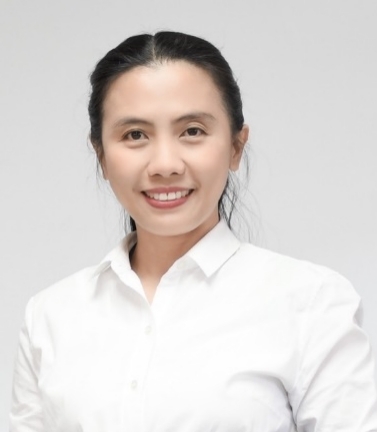
Asst.Prof. Dr.Pornthip Pongchalee, Rajamangala University of Technology Isan, Thailand.
Dr. Pornthip Pongchalee, a distinguished figure in the field of Applied Mathematics, has made significant contributions to academia and research. After obtaining her Ph.D. in Applied Mathematics from Suranaree University of Technology in 2007, she further honed her expertise at Chiang Mai University and Khon Kaen University in Thailand. Dr. Pongchalee has been an influential Assistant Professor at the Department of Applied Mathematics and Statistics, Faculty of Science and Liberal Arts, Rajamangala University of Technology Isan, Nakhon Ratchasima, Thailand, since June 2017. Her work experience also includes previous faculty positions within the same university. She is an author of academic books, notably 'Calculus 3 for Engineers' (2017), and her research interests span radial basis functions, multiquadric neural networks, numerical methods, differential equations, and optimization techniques. Dr. Pongchalee's impressive array of selected publications showcases her deep engagement with computational and experimental simulations in engineering, solidifying her as a leading mind in her field.
Dr. Pornthip Pongchalee, a distinguished figure in the field of Applied Mathematics, has made significant contributions to academia and research. After obtaining her Ph.D. in Applied Mathematics from Suranaree University of Technology in 2007, she further honed her expertise at Chiang Mai University and Khon Kaen University in Thailand. Dr. Pongchalee has been an influential Assistant Professor at the Department of Applied Mathematics and Statistics, Faculty of Science and Liberal Arts, Rajamangala University of Technology Isan, Nakhon Ratchasima, Thailand, since June 2017. Her work experience also includes previous faculty positions within the same university. She is an author of academic books, notably 'Calculus 3 for Engineers' (2017), and her research interests span radial basis functions, multiquadric neural networks, numerical methods, differential equations, and optimization techniques. Dr. Pongchalee's impressive array of selected publications showcases her deep engagement with computational and experimental simulations in engineering, solidifying her as a leading mind in her field.
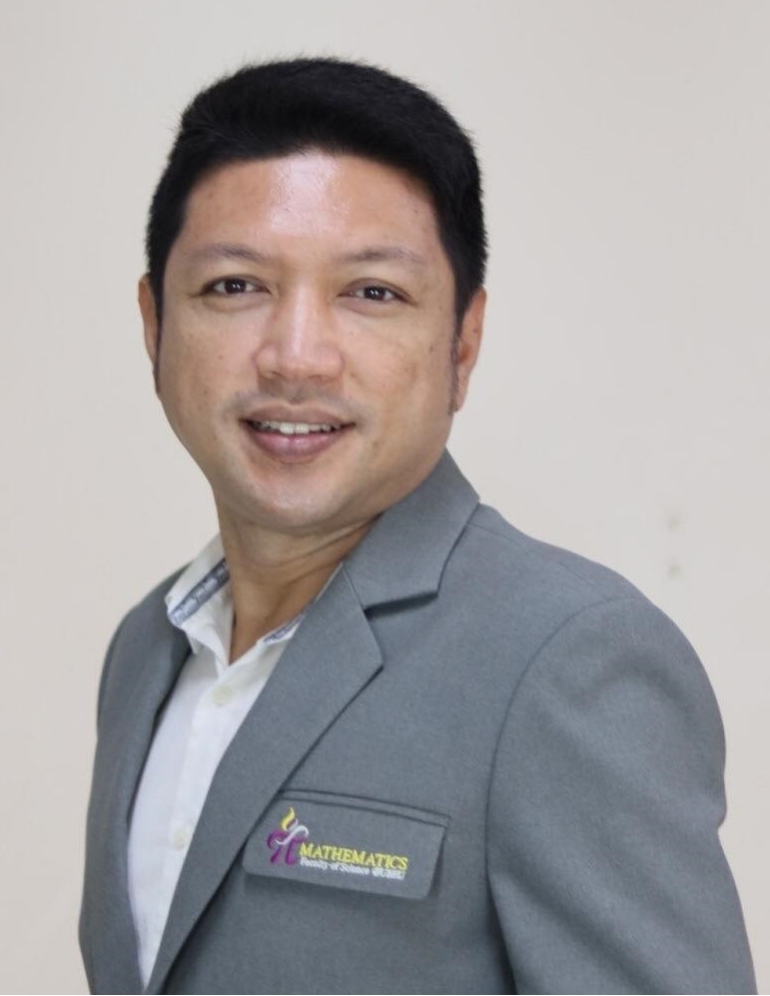
Asst.Prof. Dr.Krittidej Chanthawara, Ubon Ratchathani Rajabhat University, Thailand.
Krittidej Chanthawara, Ph.D., is an Assistant Professor in the Program of Mathematics at the Faculty of Science, Ubon Ratchathani Rajabhat University, Thailand. His academic journey began at Khon Kaen University, Thailand, where he earned a BSc in Mathematics in 2001, an MSc in Mathematics in 2005, and a Ph.D. in Applied Mathematics in 2016. Dr. Chanthawara has been a faculty member at Ubon Ratchathani Rajabhat University since June 2006. His areas of interest include numerical methods, boundary element methods, meshless/meshfree methods, radial basis functions, partial differential equations, and data interpolation and analysis. He is also the author of a book on Calculus and Analytical Geometry and has contributed to numerous publications and research projects in his field.
Krittidej Chanthawara, Ph.D., is an Assistant Professor in the Program of Mathematics at the Faculty of Science, Ubon Ratchathani Rajabhat University, Thailand. His academic journey began at Khon Kaen University, Thailand, where he earned a BSc in Mathematics in 2001, an MSc in Mathematics in 2005, and a Ph.D. in Applied Mathematics in 2016. Dr. Chanthawara has been a faculty member at Ubon Ratchathani Rajabhat University since June 2006. His areas of interest include numerical methods, boundary element methods, meshless/meshfree methods, radial basis functions, partial differential equations, and data interpolation and analysis. He is also the author of a book on Calculus and Analytical Geometry and has contributed to numerous publications and research projects in his field.

Asst.Prof. Chantana Simtrakankun, Loei Rajabhat University, Thailand.
Chantana Simtrakankul, an accomplished academic in the field of mathematics, currently serves as an Assistant Professor at the Division of Mathematics, Department of Science, Faculty of Science and Technology, Loei Rajabhat University in Thailand. She has been in this role since October 2015, after a tenure as a faculty member at the same institution and earlier at Rajamangala University of Technology Isan. Chantana completed her Master of Science in Mathematics at Khon Kaen University, Thailand, in 2006. Her areas of interest include numerical methods and analysis, differential equations, and fuzzy C mean. Chantana has contributed significantly to her field, as evident in her publications on topics like adaptive particle swarm optimization in conjunction with support vector machine and the application of wavelet convolution neural networks for breast cancer detection. Her work demonstrates a keen focus on integrating mathematical principles with practical applications in technology and health sciences.
Chantana Simtrakankul, an accomplished academic in the field of mathematics, currently serves as an Assistant Professor at the Division of Mathematics, Department of Science, Faculty of Science and Technology, Loei Rajabhat University in Thailand. She has been in this role since October 2015, after a tenure as a faculty member at the same institution and earlier at Rajamangala University of Technology Isan. Chantana completed her Master of Science in Mathematics at Khon Kaen University, Thailand, in 2006. Her areas of interest include numerical methods and analysis, differential equations, and fuzzy C mean. Chantana has contributed significantly to her field, as evident in her publications on topics like adaptive particle swarm optimization in conjunction with support vector machine and the application of wavelet convolution neural networks for breast cancer detection. Her work demonstrates a keen focus on integrating mathematical principles with practical applications in technology and health sciences.
Asst. Prof. Dr. Worarit Kopsiriphat Faculty of Education, Nakhon Ratchasima Rajabhat University, Thailand.
Asst. Prof. Dr. Worarit Kopsiriphat is an Assistant Professor at Nakhon Ratchasima Rajabhat University, Thailand. He possesses a robust multidisciplinary academic background, holding a Ph.D. in Educational Technology and Communications from Mahasarakham University, alongside degrees in Computer Science, Educational Administration, and Educational Measurement and Evaluation. Dr. Worarit's research expertise lies at the intersection of emerging digital technologies and pedagogical innovation. His recent prominent work focuses on the design and development of immersive learning environments, particularly utilizing Virtual Reality (VR) and the Metaverse. He has spearheaded research projects creating Metaverse-based virtual classrooms aimed at enhancing students' creative thinking in 3D modeling, as well as promoting inquiry-based learning for the conservation of natural and cultural heritage, such as the Korat Geopark. By bridging his foundational knowledge in computer science with advanced educational technology, his ongoing research significantly contributes to the advancement of next-generation, interactive, and intelligent learning platforms.
Asst. Prof. Dr. Worarit Kopsiriphat is an Assistant Professor at Nakhon Ratchasima Rajabhat University, Thailand. He possesses a robust multidisciplinary academic background, holding a Ph.D. in Educational Technology and Communications from Mahasarakham University, alongside degrees in Computer Science, Educational Administration, and Educational Measurement and Evaluation. Dr. Worarit's research expertise lies at the intersection of emerging digital technologies and pedagogical innovation. His recent prominent work focuses on the design and development of immersive learning environments, particularly utilizing Virtual Reality (VR) and the Metaverse. He has spearheaded research projects creating Metaverse-based virtual classrooms aimed at enhancing students' creative thinking in 3D modeling, as well as promoting inquiry-based learning for the conservation of natural and cultural heritage, such as the Korat Geopark. By bridging his foundational knowledge in computer science with advanced educational technology, his ongoing research significantly contributes to the advancement of next-generation, interactive, and intelligent learning platforms.
Dr.Wiwat Nuansing, Suranaree University of Technology, Thailand.
Dr. Wiwat Nuansing, a highly accomplished physicist, specializes in the field of nanotechnology and advanced materials. His journey began with a B.Sc. and M.Sc. in Physics from Khon Kaen University, Thailand, followed by a M.Sc. in Nanoscience and a Ph.D. in Physics of Nanostructures and Advanced Materials from the University of the Basque Country, Spain. Currently, he serves at the School of Physics, Institute of Science, Suranaree University of Technology, Thailand, and is also the leader of the G5 Materials Enterprise and Industry Group at the Center of Excellent of Advanced Functional Materials (CoE-AFM). His prior experiences include significant research roles at CIC nanoGUNE, San-Sebastian, Spain, and the Walter Schottky Institute, Munich, Germany. Dr. Nuansing's research interests span a wide range, including 3D printing technologies, nanofibers, electrospinning techniques, and the application of nanotechnology in biomedical and industrial fields. His work has led to numerous patents and publications, underscoring his contributions to the field and his commitment to advancing the application of nanotechnology.
Dr. Wiwat Nuansing, a highly accomplished physicist, specializes in the field of nanotechnology and advanced materials. His journey began with a B.Sc. and M.Sc. in Physics from Khon Kaen University, Thailand, followed by a M.Sc. in Nanoscience and a Ph.D. in Physics of Nanostructures and Advanced Materials from the University of the Basque Country, Spain. Currently, he serves at the School of Physics, Institute of Science, Suranaree University of Technology, Thailand, and is also the leader of the G5 Materials Enterprise and Industry Group at the Center of Excellent of Advanced Functional Materials (CoE-AFM). His prior experiences include significant research roles at CIC nanoGUNE, San-Sebastian, Spain, and the Walter Schottky Institute, Munich, Germany. Dr. Nuansing's research interests span a wide range, including 3D printing technologies, nanofibers, electrospinning techniques, and the application of nanotechnology in biomedical and industrial fields. His work has led to numerous patents and publications, underscoring his contributions to the field and his commitment to advancing the application of nanotechnology.
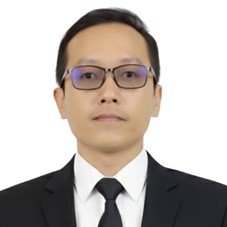
Dr. Krankamon Phukhronghin, Department of Mechatronics Engineering Faculty of Engineering and Technology, Rajamangala University of Technology Isan, Thailand
Dr. Krankamon Phukhronghin, a lecturer in Mechatronics Engineering at Rajamangala University of Technology Isan, Thailand, received his Bachelor’s, Master’s, and Doctoral degrees in Electrical Engineering from Suranaree University of Technology, Thailand. His research focuses on the application of artificial intelligence in engineering, agricultural, and industrial systems, with particular emphasis on image processing and computer vision. His work involves developing intelligent systems for inspection, monitoring, and automation using hybrid deep learning models that integrate convolutional neural networks with machine learning techniques. He also applies explainable artificial intelligence (XAI) to enhance model interpretability and support decision-making in real-world applications. In addition, he is actively involved in teaching and research in mechatronics and artificial intelligence, contributing to interdisciplinary innovations. His research interests include artificial intelligence, computer vision, image processing, intelligent systems, and AI applications in agriculture and industry.
Dr. Krankamon Phukhronghin, a lecturer in Mechatronics Engineering at Rajamangala University of Technology Isan, Thailand, received his Bachelor’s, Master’s, and Doctoral degrees in Electrical Engineering from Suranaree University of Technology, Thailand. His research focuses on the application of artificial intelligence in engineering, agricultural, and industrial systems, with particular emphasis on image processing and computer vision. His work involves developing intelligent systems for inspection, monitoring, and automation using hybrid deep learning models that integrate convolutional neural networks with machine learning techniques. He also applies explainable artificial intelligence (XAI) to enhance model interpretability and support decision-making in real-world applications. In addition, he is actively involved in teaching and research in mechatronics and artificial intelligence, contributing to interdisciplinary innovations. His research interests include artificial intelligence, computer vision, image processing, intelligent systems, and AI applications in agriculture and industry.
1. Aims of the Session
Healthcare is undergoing rapid digital transformation through real-world data platforms, remote monitoring, and AI-assisted care pathways. Yet, real clinical environments, especially primary care, remain dominated by uncertainty, incompleteness, heterogeneity, and human-centric decision making. Building on the core direction of FSDM, this special session will create a focused forum for methods that integrate AI in bioinformatics, holistic healthcare intelligence, and primary care decision support, while extending the scope to include decentralization and devolution of health services, where data fragmentation, local variation, and governance constraints make robust and interpretable analytics essential.Crucially, the session aims to bridge the gap between predictive modeling and evidence-informed healthcare, integrating Health Technology Assessment (HTA) and real-world data (RWD) to shape clinical practice guidelines in decentralized settings.
The session particularly welcomes research that bridges the following layers of “omics-to-care-to-system” transformation:
- Omics to bedside translation: biomarkers, phenotyping, patient subtyping, multi-omics integration into clinical prediction and stratification.
- Holistic primary care intelligence: multimorbidity, longitudinal trajectories, behavioral and social determinants, screening, triage, and care planning.
- Decentralized health system intelligence: district/province-level planning, referral networks, resource allocation, service devolution monitoring, and equity/access evaluation under incomplete and heterogeneous data.
2. Main topics (indicative list)
AI in bioinformatics and precision medicine• Robust biomarker discovery and feature selection for omics and multi-omics
• Patient subtyping and phenotype discovery from multi-modal data (omics + clinical + lifestyle)
• Translational modeling linking molecular signals to clinical outcomes and risk trajectories
Holistic healthcare intelligence
• Causal inference from real-world data (RWD) for treatment effect estimation and personalized care pathways
• Multimorbidity modeling, patient similarity learning, and longitudinal trajectory mining
• Early risk detection for chronic conditions using sparse primary care signals
• Behavioral adherence modeling and patient engagement analytics
• Causal inference from real-world data (RWD) for treatment effect estimation and personalized care pathways
• Multimorbidity modeling, patient similarity learning, and longitudinal trajectory mining
• Early risk detection for chronic conditions using sparse primary care signals
• Behavioral adherence modeling and patient engagement analytics
Primary healthcare management and smart strategies
• Decision support for screening, triage, referral, and care planning
• Pathway analytics and workflow-aware AI for front-line primary care settings
• Digital twin in healthcare for patient pathway simulation, care planning, and service optimization
• Decision support for screening, triage, referral, and care planning
• Pathway analytics and workflow-aware AI for front-line primary care settings
• Digital twin in healthcare for patient pathway simulation, care planning, and service optimization
Decentralization healthcare management and policy analytics
• Health Technology Assessment (HTA) for decentralized services, resource allocation, and planetary health considerations
• Analytics for devolved service performance monitoring (district/province comparisons and trends)
• Referral network mining and optimization across decentralized facilities
• Resource allocation and capacity planning under uncertainty (workforce, supplies, service access)
• Equity and access intelligence using geospatial and socioeconomic signals
• Health Technology Assessment (HTA) for decentralized services, resource allocation, and planetary health considerations
• Analytics for devolved service performance monitoring (district/province comparisons and trends)
• Referral network mining and optimization across decentralized facilities
• Resource allocation and capacity planning under uncertainty (workforce, supplies, service access)
• Equity and access intelligence using geospatial and socioeconomic signals
Trustworthy and deployable health AI
• Methodological developments for integrating AI and evidence synthesis into clinical practice guideline formulation
• Uncertainty quantification and calibration for clinical risk prediction
• Explainability and interpretable modeling for clinical and system-level decisions
• Fairness and bias auditing and robustness under domain shift and data fragmentation
• Digital twin in healthcare for interpretable simulation and decision support
• Methodological developments for integrating AI and evidence synthesis into clinical practice guideline formulation
• Uncertainty quantification and calibration for clinical risk prediction
• Explainability and interpretable modeling for clinical and system-level decisions
• Fairness and bias auditing and robustness under domain shift and data fragmentation
• Digital twin in healthcare for interpretable simulation and decision support
3. Potential contributors
To ensure strong participation and clear positioning, we will actively invite submissions from:- AI and data mining researchers working on multi-modal health data (omics + EHR + wearable + community data)
- Bioinformatics groups developing interpretable and robust multi-omics methods
- Digital health and health informatics teams with primary care datasets and workflow deployments
- Health systems and public health analytics researchers evaluating decentralization and devolution, including referral networks, capacity planning, equity/access monitoring, and policy impact assessment
- Early-career researchers with applied healthcare datasets and methodological novelty
4. Timeliness and uniqueness statement
This session is timely because healthcare systems worldwide are scaling digital transformation while facing rising multimorbidity and constrained primary care capacity. It is unique in that it explicitly integrates omics-to-bedside methods, holistic primary care intelligence, and decentralized health system decision support in one methodological forum, addressing a real gap where policy-driven devolution creates fragmented data and locally varying decisions that demand uncertainty-aware and interpretable AI.Tentative Submission Deadlines:
Submission Deadline for Full Papers: September 30, 2026
Submission Deadline for Abstracts (without full paper publication in conference proceeding or related journals): October 10, 2026
This special session is now open for submission and registration. Please submit your abstract/full paper via the Submission System and choose the option of Special Session on Digital Transformation from Omics to Primary Care in Decentralized Health Systems (Omics2Care). After that, you can make the conference registration directly via the Registration Page or the conference secretary will contact you for further information.
Session Chairs and Committee Profiles
Session Chairs
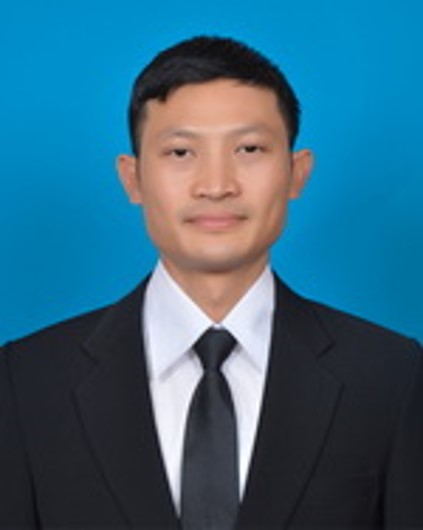
Dr. Wiwat Nuansing, Suranaree University of Technology, Thailand.
Dr. Wiwat Nuansing, a highly accomplished physicist, specializes in the field of nanotechnology and advanced materials. His journey began with a B.Sc. and M.Sc. in Physics from Khon Kaen University, Thailand, followed by a M.Sc. in Nanoscience and a Ph.D. in Physics of Nanostructures and Advanced Materials from the University of the Basque Country, Spain. Currently, he serves at the School of Physics, Institute of Science, Suranaree University of Technology, Thailand, and is also the leader of the G5 Materials Enterprise and Industry Group at the Center of Excellent of Advanced Functional Materials (CoE-AFM). His prior experiences include significant research roles at CIC nanoGUNE, San-Sebastian, Spain, and the Walter Schottky Institute, Munich, Germany. Dr. Nuansing's research interests span a wide range, including 3D printing technologies, nanofibers, electrospinning techniques, and the application of nanotechnology in biomedical and industrial fields. His work has led to numerous patents and publications, underscoring his contributions to the field and his commitment to advancing the application of nanotechnology.
Dr. Wiwat Nuansing, a highly accomplished physicist, specializes in the field of nanotechnology and advanced materials. His journey began with a B.Sc. and M.Sc. in Physics from Khon Kaen University, Thailand, followed by a M.Sc. in Nanoscience and a Ph.D. in Physics of Nanostructures and Advanced Materials from the University of the Basque Country, Spain. Currently, he serves at the School of Physics, Institute of Science, Suranaree University of Technology, Thailand, and is also the leader of the G5 Materials Enterprise and Industry Group at the Center of Excellent of Advanced Functional Materials (CoE-AFM). His prior experiences include significant research roles at CIC nanoGUNE, San-Sebastian, Spain, and the Walter Schottky Institute, Munich, Germany. Dr. Nuansing's research interests span a wide range, including 3D printing technologies, nanofibers, electrospinning techniques, and the application of nanotechnology in biomedical and industrial fields. His work has led to numerous patents and publications, underscoring his contributions to the field and his commitment to advancing the application of nanotechnology.
Dr. Cong Feng, Department of Bioinformatics, College of Life Sciences, Zhejiang University, China.
Cong Feng, postdoctoral fellow in Prof. Ming Chen's group at Zhejiang University, China; PhD in Bioinformatics from Zhejiang University (2021). Research expertise in bioinformatics and computational biology, with a focus on omics data analysis and the development of bioinformatics applications. Special interest in the identification and functional analysis of transposable elements and regulatory mechanisms during hematopoietic stem cell ontogeny and development. Published as first or co-first author in Briefings in Bioinformatics, BMC Biology, Scientific Data, BMC Genomics; collaborative papers published in Nature Communications, Cell Reports, Bioinformatics, Database, among others. Funded by the National Natural Science Foundation of China and the China Postdoctoral Science Foundation.
Cong Feng, postdoctoral fellow in Prof. Ming Chen's group at Zhejiang University, China; PhD in Bioinformatics from Zhejiang University (2021). Research expertise in bioinformatics and computational biology, with a focus on omics data analysis and the development of bioinformatics applications. Special interest in the identification and functional analysis of transposable elements and regulatory mechanisms during hematopoietic stem cell ontogeny and development. Published as first or co-first author in Briefings in Bioinformatics, BMC Biology, Scientific Data, BMC Genomics; collaborative papers published in Nature Communications, Cell Reports, Bioinformatics, Database, among others. Funded by the National Natural Science Foundation of China and the China Postdoctoral Science Foundation.
Committee member 1:

Prof. Dr. Luis Beltrán Ramos-Sánchez, Department of Chemical Engineering, University of Camagüey, Cuba.
Luis B. Ramos Sánchez is a Full Professor of Chemical and Biochemical Reaction Engineering at the University of Camagüey, Cuba. He holds a Ph.D. in Chemical Engineering (2000) and has over 40 years of experience in process engineering, biorefineries, and bioprocess development. His research focuses on mathematical modeling, simulation, optimization, and intensification of chemical and biochemical technologies. In the health sector, he worked on predicting COVID-19 variables and developing bioprocesses for the production of recombinant vaccines. He has led numerous national and international projects, including those on lignocellulosic biodiesel, enzymatic synthesis, and animal feed production. Dr. Ramos has supervised 10 doctoral theses, published over 45 papers (h-index 15), and participated in scientific committees and advisory commissions for the Cuban Ministry of Higher Education. He currently heads the Joint BioProcess Laboratory of BioCubaFarma-University of Camagüey. His professional recognitions include provincial CITMA awards and a special distinction from the Minister of Higher Education. He is proficient in English and Portuguese, with basic knowledge of German. His work bridges academia, industry, and biotechnology innovation.
Luis B. Ramos Sánchez is a Full Professor of Chemical and Biochemical Reaction Engineering at the University of Camagüey, Cuba. He holds a Ph.D. in Chemical Engineering (2000) and has over 40 years of experience in process engineering, biorefineries, and bioprocess development. His research focuses on mathematical modeling, simulation, optimization, and intensification of chemical and biochemical technologies. In the health sector, he worked on predicting COVID-19 variables and developing bioprocesses for the production of recombinant vaccines. He has led numerous national and international projects, including those on lignocellulosic biodiesel, enzymatic synthesis, and animal feed production. Dr. Ramos has supervised 10 doctoral theses, published over 45 papers (h-index 15), and participated in scientific committees and advisory commissions for the Cuban Ministry of Higher Education. He currently heads the Joint BioProcess Laboratory of BioCubaFarma-University of Camagüey. His professional recognitions include provincial CITMA awards and a special distinction from the Minister of Higher Education. He is proficient in English and Portuguese, with basic knowledge of German. His work bridges academia, industry, and biotechnology innovation.
Committee member 2:

Assoc. Prof. Dr. Saskia Kelders, Department of Psychology, Health and Technology, Faculty of Behavioral, Management and Social Sciences, University of Twente, The Netherlands.
Saskia Kelders is Associate Professor at the Department of Psychology, Health and Technology at the University of Twente, Enschede, the Netherlands and extraordinary professor at Optentia Research Focus Area, North-West University, Vaal Triangle Campus in South Africa. She chairs the ‘engaging eHealth Technology lab’ at the University of Twente which focuses on improving development, evaluation and implementation of digital health interventions. Her work combines technological and psychological perspectives and is multidisciplinary in nature. Currently, she works on her personal ERC Starting grant on engagement as a mechanism of impact for digital mental health interventions. In this innovative new research line, she uses new-to-field and challenging research methods (e.g. single case experimental design, realist evaluation, personalized and adaptive interventions). She is also editor of a new eHealth handbook with contributions from many influential (inter)national scholars.
Saskia Kelders is Associate Professor at the Department of Psychology, Health and Technology at the University of Twente, Enschede, the Netherlands and extraordinary professor at Optentia Research Focus Area, North-West University, Vaal Triangle Campus in South Africa. She chairs the ‘engaging eHealth Technology lab’ at the University of Twente which focuses on improving development, evaluation and implementation of digital health interventions. Her work combines technological and psychological perspectives and is multidisciplinary in nature. Currently, she works on her personal ERC Starting grant on engagement as a mechanism of impact for digital mental health interventions. In this innovative new research line, she uses new-to-field and challenging research methods (e.g. single case experimental design, realist evaluation, personalized and adaptive interventions). She is also editor of a new eHealth handbook with contributions from many influential (inter)national scholars.
Committee member 3:
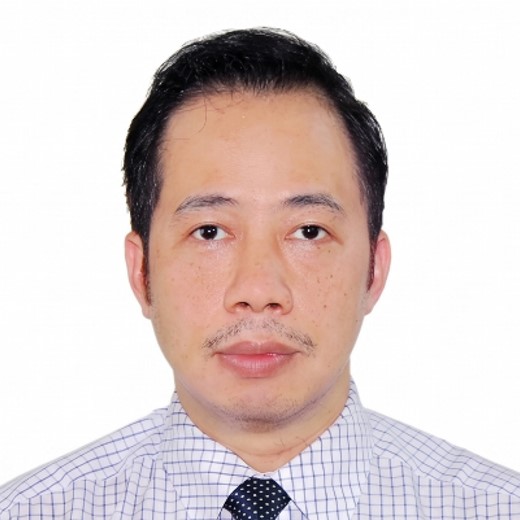
Assoc. Prof. Dr. Hai V. Pham, Department of Computer Science, School of Information and Communication Technology, Hanoi University of Science and Technology, Vietnam.
HAI VAN PHAM received the Doctor of Engineering (Ph.D.) degree from Ritsumeikan University, Japan. He is currently an Associate Professor with the School of Information and Communication Technology, Hanoi University of Science and Technology. He has published over 150 research articles in international journals and conference proceedings in the ISI/ Scopus index, domestic research papers, and co-authored several book chapters. He is also a Senior Expert, who conducted research projects between HUST researchers—students and companies in applied AI and industry 4.0. His current research interests include artificial intelligence, fuzzy logic, fuzzy graphs, fuzzy knowledge graphs, rule-based systems and fuzzy systems, soft computing, machine learning, and big data analysis in the trends of digital transformation and Industry 4.0. He has served as a member of the program, an associate editor, and a technical committee for international conferences. He acts as a Reviewer for international conferences and journals, such as IEEE TRANSACTION, IEEE ACCESS, Soft Computing.
HAI VAN PHAM received the Doctor of Engineering (Ph.D.) degree from Ritsumeikan University, Japan. He is currently an Associate Professor with the School of Information and Communication Technology, Hanoi University of Science and Technology. He has published over 150 research articles in international journals and conference proceedings in the ISI/ Scopus index, domestic research papers, and co-authored several book chapters. He is also a Senior Expert, who conducted research projects between HUST researchers—students and companies in applied AI and industry 4.0. His current research interests include artificial intelligence, fuzzy logic, fuzzy graphs, fuzzy knowledge graphs, rule-based systems and fuzzy systems, soft computing, machine learning, and big data analysis in the trends of digital transformation and Industry 4.0. He has served as a member of the program, an associate editor, and a technical committee for international conferences. He acts as a Reviewer for international conferences and journals, such as IEEE TRANSACTION, IEEE ACCESS, Soft Computing.
Committee member 4:
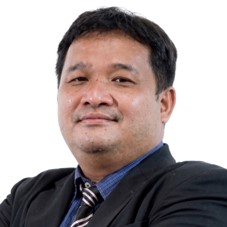
Assoc. Prof. Dr. Tanunchai Boonnuk, Public Health Program, Faculty of Science and Technology, Loei Rajabhat University, Thailand.
Assoc. Prof.Dr. Tanunchai Boonnuk is an accomplished academic currently serving as an Associate Professor of Public Health and the Head of the Department of Applied Science at the Faculty of Science and Technology, Loei Rajabhat University. His highly multidisciplinary educational background uniquely bridges the fields of health sciences and engineering. He holds dual doctoral degrees, having earned a Doctor of Public Health from Burapha University and a Doctor of Engineering in Electrical Engineering from Mahanakorn University of Technology. Furthermore, his diverse qualifications include master's degrees in Biostatistics and Biomedical Instrumentation, complemented by four distinct bachelor's degrees spanning computer engineering, computer science, environmental health, and community public health. As a prolific researcher, Dr. Tanunchai has published extensively across both international and national scholarly databases. His research predominantly focuses on integrating advanced computational technology into public health and medical applications. His key scholarly contributions include utilizing machine learning models for clinical predictions, developing active flow models for medical image segmentation, and applying geographic information systems (GIS) to simulate traffic accidents and assess environmental health hazards. Additionally, he is actively involved in community-based research addressing health literacy, occupational safety, and targeted poverty alleviation strategies in Thai communities.
Assoc. Prof.Dr. Tanunchai Boonnuk is an accomplished academic currently serving as an Associate Professor of Public Health and the Head of the Department of Applied Science at the Faculty of Science and Technology, Loei Rajabhat University. His highly multidisciplinary educational background uniquely bridges the fields of health sciences and engineering. He holds dual doctoral degrees, having earned a Doctor of Public Health from Burapha University and a Doctor of Engineering in Electrical Engineering from Mahanakorn University of Technology. Furthermore, his diverse qualifications include master's degrees in Biostatistics and Biomedical Instrumentation, complemented by four distinct bachelor's degrees spanning computer engineering, computer science, environmental health, and community public health. As a prolific researcher, Dr. Tanunchai has published extensively across both international and national scholarly databases. His research predominantly focuses on integrating advanced computational technology into public health and medical applications. His key scholarly contributions include utilizing machine learning models for clinical predictions, developing active flow models for medical image segmentation, and applying geographic information systems (GIS) to simulate traffic accidents and assess environmental health hazards. Additionally, he is actively involved in community-based research addressing health literacy, occupational safety, and targeted poverty alleviation strategies in Thai communities.
Committee member 5:

Asst. Prof. Dr. Rafael José Vieira, RISE-Health, Department of Community Medicine, Information and Health Decision Sciences (MEDCIDS), Faculty of Medicine, University of Porto, Portugal.
Rafael José Vieira (MD PhD) is an Assistant Professor at the Faculty of Medicine of the University of Porto, where he also serves as a member of the Executive Board. He holds a PhD in Clinical and Health Services Research and is a member of the RISE-Health research unit, Cochrane Portugal and the Portuguese GRADE Network. His work focuses on health technology assessment, evidence synthesis, causal inference, and the use of real-world data to support decision-making in healthcare. He has led and contributed to multiple systematic reviews and network meta-analyses for international clinical practice guidelines, and has been involved in methodological developments integrating artificial intelligence into guideline formulation. His research also explores the intersection between human and planetary health, particularly in the context of guideline development and decision-making. In addition to his research activities, he teaches biostatistics and research methods at undergraduate and postgraduate levels. He has authored over 80 peer-reviewed publications and is actively involved in international collaborations across Europe.
Rafael José Vieira (MD PhD) is an Assistant Professor at the Faculty of Medicine of the University of Porto, where he also serves as a member of the Executive Board. He holds a PhD in Clinical and Health Services Research and is a member of the RISE-Health research unit, Cochrane Portugal and the Portuguese GRADE Network. His work focuses on health technology assessment, evidence synthesis, causal inference, and the use of real-world data to support decision-making in healthcare. He has led and contributed to multiple systematic reviews and network meta-analyses for international clinical practice guidelines, and has been involved in methodological developments integrating artificial intelligence into guideline formulation. His research also explores the intersection between human and planetary health, particularly in the context of guideline development and decision-making. In addition to his research activities, he teaches biostatistics and research methods at undergraduate and postgraduate levels. He has authored over 80 peer-reviewed publications and is actively involved in international collaborations across Europe.
Committee member 6:
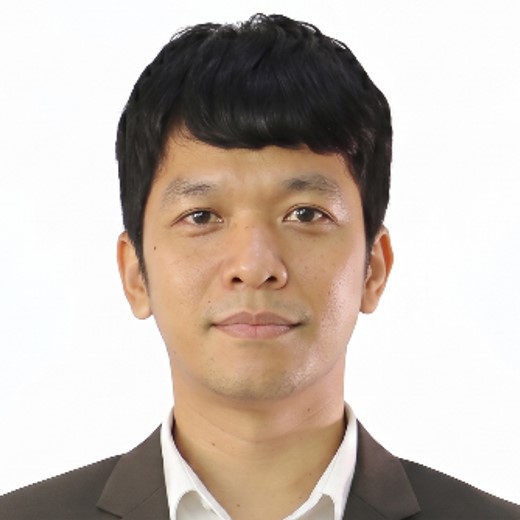
Dr. Chutrapee Popitikul, Computer Education Program, Faculty of Science and Technology, Nakhon Ratchasima Rajabhat University, Thailand.
Dr. Chutrapee Popitikul is a Lecturer in the Computer Education Program at the Faculty of Science and Technology, Nakhon Ratchasima Rajabhat University (NRRU), Thailand. He holds a Doctor of Philosophy in Technology Management from Rajabhat Maha Sarakham University (2019), a Master of Education in Educational Technology and Communication from Nakhon Ratchasima Rajabhat University (2012), and a Bachelor of Engineering in Computer Engineering from Rajamangala University of Technology Isan (2007). He previously served as Deputy Director of the Computer Center at NRRU from 2020 to 2024. His areas of expertise span computer science, information technology, educational technology, technology management, and the Internet of Things (IoT). Dr. Chutrapee has contributed to multiple large-scale research initiatives, notably as a co-researcher on a series of funded projects addressing poverty alleviation in Nakhon Ratchasima Province under the Program Management Unit for Area-based Development (PMU-A) and the National Science Research and Innovation Fund (NSRF), with a combined budget exceeding 58 million Thai Baht. He has published research in areas including flipped classroom learning management, IoT-based smart energy systems, and computational thinking education, with work appearing in TCI-indexed journals. His intellectual property contributions include a registered software copyright for an Augmented Reality system developed to enhance health tourism industry capabilities, recognized by the Department of Intellectual Property, Ministry of Commerce, Thailand (2025). Beyond research, Dr. Chutrapee serves as an active academic resource for the region, delivering training in applied artificial intelligence and digital competency development for government organizations and research institutions at both provincial and national levels.
Dr. Chutrapee Popitikul is a Lecturer in the Computer Education Program at the Faculty of Science and Technology, Nakhon Ratchasima Rajabhat University (NRRU), Thailand. He holds a Doctor of Philosophy in Technology Management from Rajabhat Maha Sarakham University (2019), a Master of Education in Educational Technology and Communication from Nakhon Ratchasima Rajabhat University (2012), and a Bachelor of Engineering in Computer Engineering from Rajamangala University of Technology Isan (2007). He previously served as Deputy Director of the Computer Center at NRRU from 2020 to 2024. His areas of expertise span computer science, information technology, educational technology, technology management, and the Internet of Things (IoT). Dr. Chutrapee has contributed to multiple large-scale research initiatives, notably as a co-researcher on a series of funded projects addressing poverty alleviation in Nakhon Ratchasima Province under the Program Management Unit for Area-based Development (PMU-A) and the National Science Research and Innovation Fund (NSRF), with a combined budget exceeding 58 million Thai Baht. He has published research in areas including flipped classroom learning management, IoT-based smart energy systems, and computational thinking education, with work appearing in TCI-indexed journals. His intellectual property contributions include a registered software copyright for an Augmented Reality system developed to enhance health tourism industry capabilities, recognized by the Department of Intellectual Property, Ministry of Commerce, Thailand (2025). Beyond research, Dr. Chutrapee serves as an active academic resource for the region, delivering training in applied artificial intelligence and digital competency development for government organizations and research institutions at both provincial and national levels.
Committee member 7:
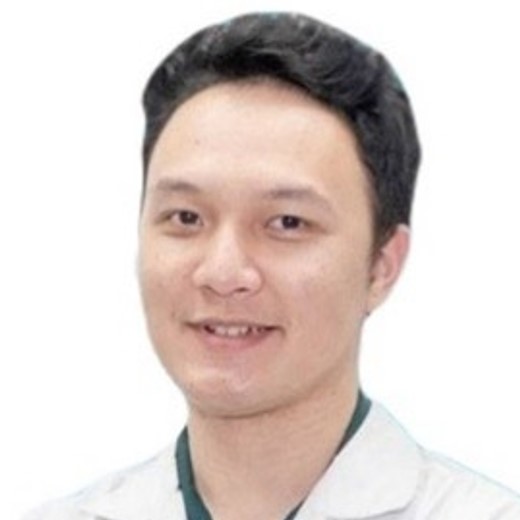
Dr. Nattapat Khumtong (MD), Department of Family and Community Medicine, Institute of Medicine, Suranaree University of Technology, Nakhon Ratchasima, Thailand.
Dr. Nattapat Khumtong is a medical doctor affiliated with the Department of Family and Community Medicine, Institute of Medicine, Suranaree University of Technology, Nakhon Ratchasima, Thailand. He earned his Doctor of Medicine degree from Khon Kaen University in 2019 and is currently pursuing a PhD in Clinical Epidemiology at the Faculty of Medicine Ramathibodi Hospital, Mahidol University, Thailand. His professional background reflects both clinical practice and academic development. From 2019 to 2022, he completed internship training in the Department of Orthopedics at Suranaree University of Technology Hospital. He later served as medical staff in the Department of Family and Community Medicine at the same hospital from 2022 to 2023. His research interests include clinical epidemiology, evidence-based medicine, systematic review and network meta-analysis, real-world data analysis, causal inference, biostatistics, advanced statistical modeling, medical research methodology, curriculum development, health economics, and health technology assessment. He has also contributed to Scopus-indexed publications, demonstrating his growing engagement in medical and health research.
Dr. Nattapat Khumtong is a medical doctor affiliated with the Department of Family and Community Medicine, Institute of Medicine, Suranaree University of Technology, Nakhon Ratchasima, Thailand. He earned his Doctor of Medicine degree from Khon Kaen University in 2019 and is currently pursuing a PhD in Clinical Epidemiology at the Faculty of Medicine Ramathibodi Hospital, Mahidol University, Thailand. His professional background reflects both clinical practice and academic development. From 2019 to 2022, he completed internship training in the Department of Orthopedics at Suranaree University of Technology Hospital. He later served as medical staff in the Department of Family and Community Medicine at the same hospital from 2022 to 2023. His research interests include clinical epidemiology, evidence-based medicine, systematic review and network meta-analysis, real-world data analysis, causal inference, biostatistics, advanced statistical modeling, medical research methodology, curriculum development, health economics, and health technology assessment. He has also contributed to Scopus-indexed publications, demonstrating his growing engagement in medical and health research.